
Horseshoe Crab
In December 2025, Governor Hochul signed the Horseshoe Crab Protection Act into law!
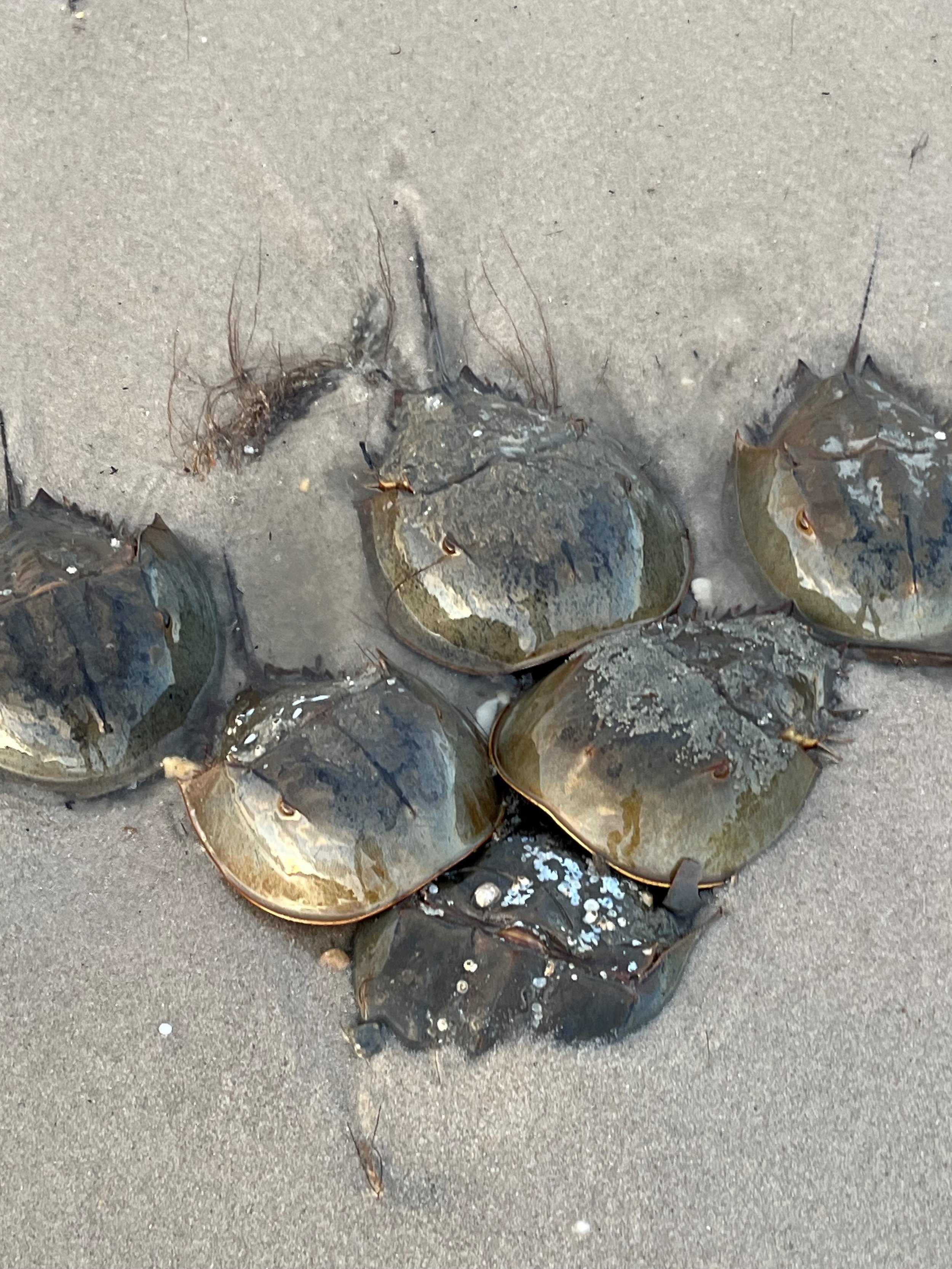
Horseshoe crabs have existed for 450 million years. That’s 200 million years older than dinosaurs! There are four extant species of horseshoe crabs and they are more closely related to spiders and scorpions than crabs. They have ten eyes and copper-based blue blood.
Horseshoe crabs are a keystone species and an important part of our marine ecosystem. For half a century humans have depended on them for our survival. Their special blue blood is used to detect infection-causing bacteria in injectable drugs, intravenous solutions, vaccines and surgical implants used in modern medicine.
Luckily a new synthetic alternative to horseshoe crab blood is being integrated (albeit at a slow pace) into the biomedical industry, but horseshoe crabs are still harvested for use as bait in commercial eel and conch fisheries.
Atlantic horseshoe crab numbers have been steadily declining. The two most recent stock assessments show NY populations as being in “poor” status, with lower numbers than any other state on the east coast.
The decline in populations is mostly due to harvesting them to use as bait but they are also losing their spawning grounds due to sea level rise and shoreline hardening (seawalls and bulkheads).
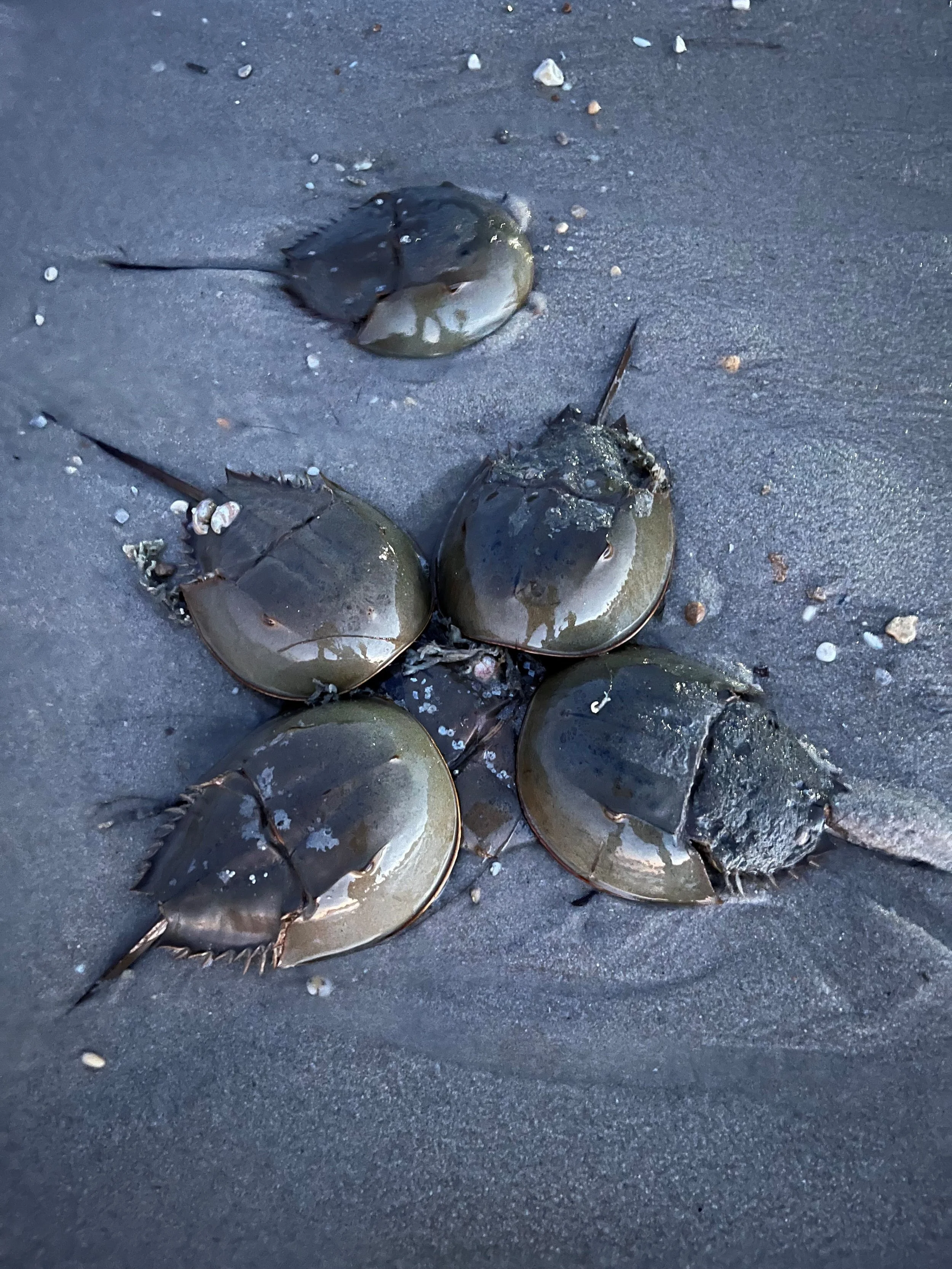
- Horseshoe Crab Facts -
Horseshoe crabs are harmless!
Horseshoe crabs are not poisonous and they do not use their tails (telsons) to sting or stab people, they use them to help flip over when they get caught upside down.
Horseshoe crabs have been in existence for approximately 450 million years. That’s twice as old as the dinosaurs!
There are four species of horseshoe crabs – one American species and three Asian species.
In the United States horseshoe crabs are only found along the eastern coast from Maine to Florida and along the Yucatan peninsula in Mexico.
Horseshoe crabs have copper-based blue blood and ten eyes.
Horseshoe crabs are more closely related to scorpions and spiders than they are to crabs.
Horseshoe crabs are in danger from overharvesting for use as bait, for the use of their blood in the biomedical industry, and because of coastline development which diminishes their spawning grounds.
Since the late 1970s horseshoe crab blood has been used in the biomedical industry to test for bacterial endotoxins in nearly every pharmaceutical drug, vaccine and surgical implant used by humans.
Horseshoe crab blood is used to test the purity of the COVID-19 vaccines.